
If you’re traveling to Japan, you might think that as long as you speak English, you’ll be fine.
English is widely used around the world, and most Japanese people study it throughout junior high school and high school.
So it would be reasonable to expect that you can communicate in English to some extent in Japan.
But when you actually travel here, there will probably be moments when you think:
“English doesn’t work as well as I expected.”
So why do Japanese people struggle to communicate in English after studying it for years?
As a Japanese person, I think there’s more to it than simply how much English we know.
- In Japan, You Can Live Without Speaking English
- “I Don’t Understand” and “I Don’t Know How to Answer” Are Different
- Not Speaking English Doesn’t Mean We Don’t Want to Help
- When Speaking to Japanese People, Keep Your English Short
- If That Still Doesn’t Work, Use Your Smartphone
- Sometimes English Won’t Work in Japan
In Japan, You Can Live Without Speaking English
I think this is a big part of it.
If you live in Japan, almost your entire daily life can be done in Japanese.
Shopping, work, hospitals, restaurants, trains.
Going through an entire day without speaking a single word of English is completely normal.
After leaving school, some Japanese people rarely have any reason to speak English at all.
In fact, a 2024 survey of 501 Japanese people in their 20s to 50s found that 70.2% said they were not good at English.
The most common reason was:
“I don’t have opportunities to speak English, so I lack confidence” — 58.5%.
In other words, many Japanese people have studied English, but have very little experience actually using it as a tool for communication.
“I Don’t Understand” and “I Don’t Know How to Answer” Are Different
Imagine you ask a Japanese person a question in English.
They look unsure and don’t give you an answer.
You might think:
“They didn’t understand my English at all.”
But sometimes, they more or less understand what you’re asking.
The problem is:
They don’t know how to answer you in English.
Japanese people study English vocabulary and grammar at school.
Many can understand relatively simple English when they read it, but when someone suddenly starts speaking to them, the words don’t come out so easily.
I’m like this myself.
When I try to speak English, I start thinking:
“I need to make a proper English sentence.”
Now, think about this for a second.
If I asked you,
“Can you speak Japanese?”
you’d say:
“Yes! Sushi! Fujiyama!”
Right?
But Japanese people are the opposite.
Ask most Japanese people,
“Do you speak English?”
and they’ll answer:
“No.”
But they can say Hello.
They know Hamburger.
They can even say I love you.
And they still say they can’t speak English.
For Japanese people, “being able to speak English” doesn’t mean knowing a few English words. It means being able to make proper sentences and have a conversation.
So when someone suddenly speaks to us in English, we start thinking:
“I need to answer in proper English.”
We could probably communicate something just by using the words we know.
But while we’re trying to think of the correct English, sometimes nothing comes out at all.
From the outside, it may look like the Japanese person doesn’t understand you.
But actually, the Japanese person is struggling with how to answer.
Not Speaking English Doesn’t Mean We Don’t Want to Help
This is something I’d like travelers to Japan to know.
In the same survey, while 70.2% said they were not good at English, 77.6% said they wanted to welcome international visitors to Japan.
The most common reason was:
“I want them to enjoy Japan” — 47.6%.
I think those two numbers say a lot about how many Japanese people feel.
We’re not confident in our English.
But we still want visitors to enjoy their time in Japan.
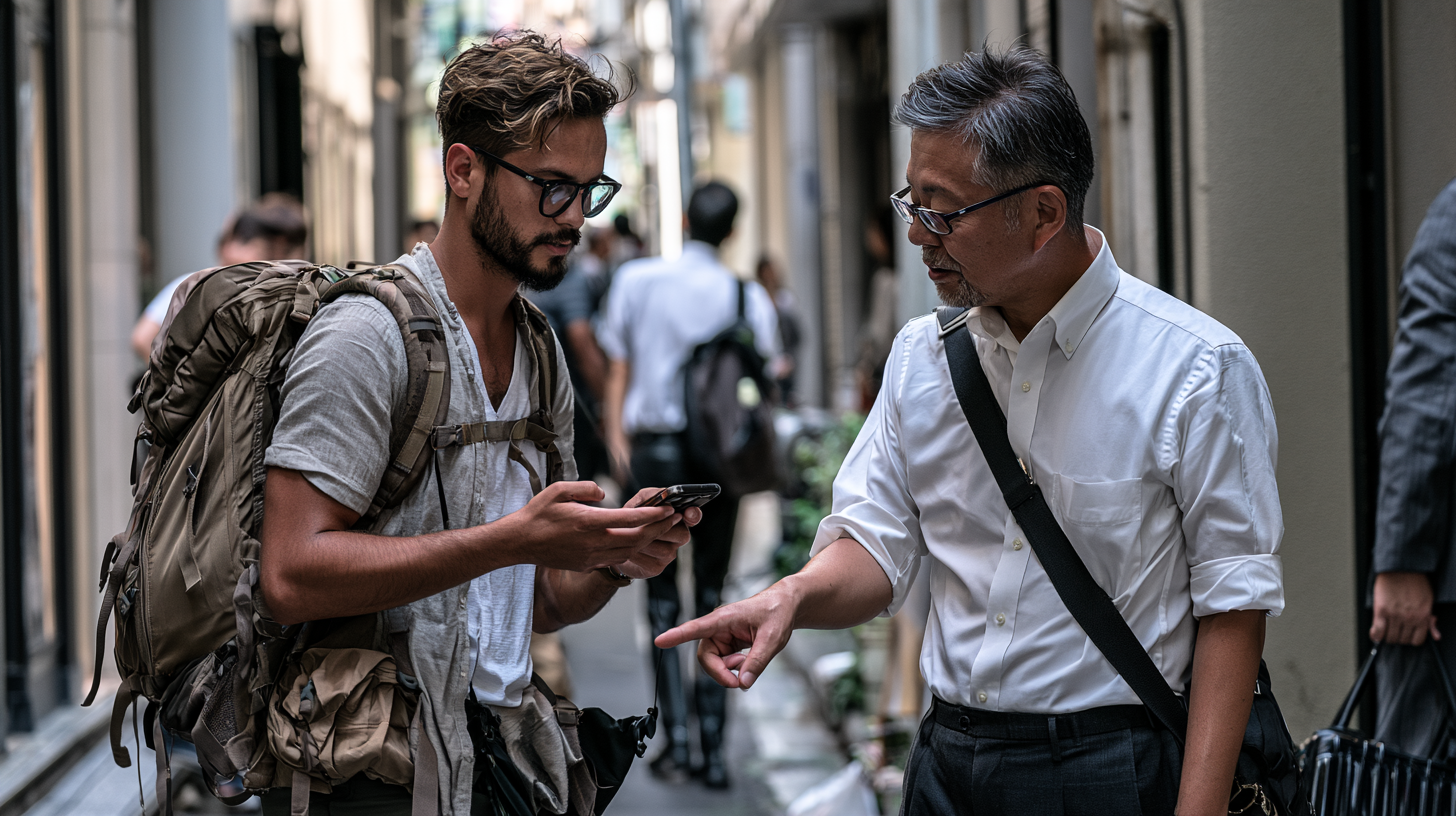
If you’re having trouble and ask a Japanese person for help, there are plenty of people who will try to understand what you mean and communicate something back, even if they can’t answer you well in English.
They might search for words they know, use gestures, look at a map, or pull out their smartphone.
They’re thinking:
“How can I make this person understand?”
When Speaking to Japanese People, Keep Your English Short
So what should you do when you need to speak English with someone in Japan?
My advice is simple:
Keep it as short as possible.
For example, if you’re at a station and want to know how to get to Shinjuku Station, instead of saying:
Excuse me, could you tell me how I can get to Shinjuku Station from here?
try:
Shinjuku Station?
and show them Google Maps.
That will often be much easier to understand.
It doesn’t need to be a correct sentence.
The goal isn’t to speak correct English.
The goal is for both of you to understand each other.
And speak slowly.
Long sentences spoken at the speed native English speakers normally use can be very difficult for many Japanese people to follow.
But you don’t need to speak louder.
The problem isn’t that we can’t hear you.
Shorter, not louder.
Slower, not louder.
That alone can make communication much easier.
If That Still Doesn’t Work, Use Your Smartphone
If English alone isn’t working, there’s no reason to keep trying to solve everything with English.
Use Google Translate.
Show the destination on Google Maps.
Show the name of the restaurant or station as text.
Show a photo.
Today, a smartphone can make the language barrier much smaller.
Sometimes the Japanese person you’re talking to will pull out their own phone and start translating too.
Use whatever works.
Sometimes English Won’t Work in Japan
Of course, there are Japanese people who speak English fluently.
At hotels, tourist attractions and other places that regularly deal with international visitors, you may have no trouble communicating entirely in English.
But it’s better not to assume that English will work everywhere in Japan.
And you don’t need to worry too much about that.
If English isn’t working:
Make it shorter.
Speak slowly.
Show them what you mean.
And if that still doesn’t work, translate it.
That’s enough.
You don’t need to speak perfect English.
The Japanese person you’re talking to is probably worrying about exactly the same thing.