When you think about traveling to Japan for the first time, what kind of country do you imagine?
Polite people.
A society where people follow the rules.
Clean streets with hardly any litter.
And maybe, along with all the excitement of visiting Japan, there’s a small part of you wondering:
What if I accidentally do something rude?
As someone who lives in Japan, I’m happy when visitors take the time to learn about Japanese culture and etiquette.
But you don’t need to be too worried about getting everything right.
Japanese people don’t follow every rule perfectly all the time either. And you certainly don’t need to memorize a long list of dos and don’ts before getting on the plane.
Pay a little attention to the people around you. If you’re not sure what to do, look around or ask someone.
Most of the time, that’s enough.
That said, there are plenty of everyday things in Japan that feel so normal to us that we don’t even think to explain them—but they can be a little confusing if it’s your first time here.
Here are a few you might come across during your trip.
- The streets are clean, but trash cans can be surprisingly hard to find
- That bag on the empty seat might not be forgotten
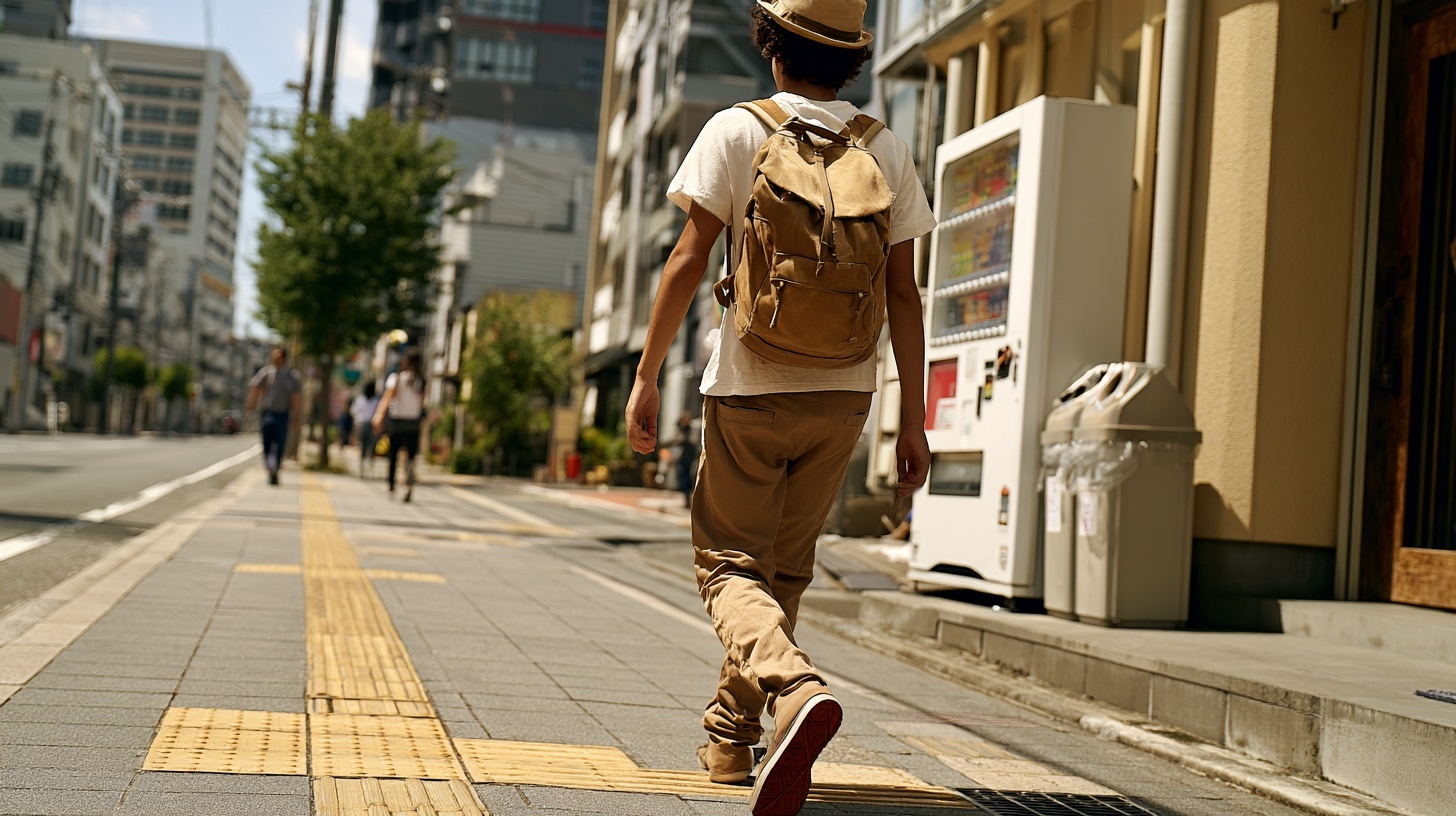
- You’ll probably walk more than you expect
- Vending machines really are everywhere
- You don’t need to worry about tipping
- You don’t need to understand everything about Japan before you arrive
The streets are clean, but trash cans can be surprisingly hard to find
One of the first things you may notice in Japan is how little litter there is on the streets.
Then, eventually, you’ll have something you want to throw away.
And that’s when you may notice something else.
Trash cans can be surprisingly hard to find.
You’ll find them in some convenience stores, shopping centers, and train stations, but when you’re simply walking around the city, finding one isn’t always easy.
You might even find yourself wondering:
If there are so few trash cans, why isn’t there more trash on the street?
In Japan, if there’s nowhere nearby to throw something away, it’s not unusual to carry your trash with you until you find somewhere to dispose of it.
Keeping a small plastic bag with you while you’re out can be surprisingly useful.
For a country known for its clean streets, the lack of public trash cans can feel like a strange contradiction at first.
That bag on the empty seat might not be forgotten
At a café or food court, you might see an empty table with a bag or some belongings sitting on one of the seats.
It isn’t necessarily something someone forgot.
In Japan, some people leave their belongings at a table to save their seat before going to order.
I do this myself sometimes, and I’ve never had anything stolen or run into trouble because of it.
Of course, that doesn’t mean things never get stolen in Japan.
I’m definitely not suggesting that you leave your passport, wallet, or other valuables unattended.
But seeing someone use their belongings to save a seat isn’t particularly unusual here.
You’ll probably walk more than you expect
Japan—especially its major cities—has an extensive public transportation system.
If you’ve ever looked at a map of Tokyo’s train and subway lines, you may have already noticed just how extensive it is.
With so many trains and subway lines, you might assume you won’t need to walk very much.
In reality, you’ll probably walk a lot more than you expect.
You’ll walk to the station.
You’ll walk through some very large stations.
You’ll walk from the nearest station to your destination.
And once you reach a sightseeing area, you may spend another few hours exploring it on foot.
If you’re visiting temples and shrines in Kyoto or exploring different neighborhoods in Tokyo, there may be days when it feels like you’ve been walking almost nonstop.
Planning how to get around Japan is important.
But bringing comfortable shoes is pretty important too.
And while you’re doing all that walking, you’ll probably notice something else that is very Japanese.
Vending machines really are everywhere
Japan really does have a lot of vending machines.
And they’re not only around train stations or busy shopping districts.
You’ll find them in residential neighborhoods and in places where you might not expect to see one at all.
When you’re spending hours walking around, being able to grab a drink from a nearby vending machine can be very convenient.
There’s also something about them that many visitors may not know.
Outdoor drink vending machines in Japan generally display the address of their location.
So if you’re ever unsure exactly where you are, take a look at a nearby vending machine.
The address on it may help you figure out your location.
You don’t need to worry about tipping
If you come from a country where tipping is common, you might wonder:
How much should I tip in Japan?
This one is easy.
You don’t need to tip in Japan.
After eating at a restaurant or taking a taxi, you can simply pay the amount you’re charged.
Sometimes you might receive great service and want to give the person a little extra money to show your appreciation.
But in Japan, you may find that people are quite reluctant to accept money offered that way.
Instead, try giving them a smile and saying:
Arigato.
You don’t need to speak much Japanese.
Hearing that simple word from someone who has traveled from another country to visit Japan can genuinely make us happy.
If you enjoyed the service or your time in Japan, simply letting someone know that you appreciated it can mean much more than leaving extra money.
You don’t need to understand everything about Japan before you arrive
There are many things in Japan that feel completely ordinary to Japanese people but may seem unusual when you experience them for the first time.
And of course, Japan isn’t unique in that way.
I’ve had plenty of moments while traveling abroad when I was confused by something that was completely normal to the people who lived there.
When you visit a country you don’t know, there are always going to be things you don’t understand.
So you don’t need to learn every Japanese rule or custom before you come here.
Of course, respecting the culture of the country you’re visiting matters.
But you don’t need to spend your trip worrying:
What if I make one mistake and everyone thinks I’m a rude tourist?
If you’re not sure what to do, look at what the people around you are doing.
If you need help, ask someone.
And when someone helps you, say thank you.
That’s really enough in most situations.
I hope you can come to Japan without worrying too much about getting everything right—and simply enjoy being here.
And whenever something makes you wonder, How does this work in Japan?, I hope The Japan We Know can help make it a little easier to understand.